Twenty-three years ago, the modern comic book movie genre was invented with Tim Burton's
Batman. Aside from the
Batman franchise, though, not a whole lot good came out of the success of that first film over the next decade. It wasn't until 2000's
X-Men that we started to see that initial promise start to blossom; it wasn 2002's
Spider-Man, however, that made the super-hero movie into the Summer juggernaut that it is today. I will admit that I absolutely love the first
Spider-Man. It was fun, dramatic, campy, and had a great cast. Not necessarily an
all-star cast, but they fit the tone perfectly. To this day, I can't hear the Lord's Prayer without adding "Finish it!" in a Green Goblin voice.
Spider-Man 2 is a better story with a less ridiculous villain; it is up to your personal tastes as to which movie is preferable.
Spider-Man 3, though, is utter crap. However bad that last entry was, though --- "laughably bad" is too generous --- only five years have passed since its failure and this series reboot. Well, let's be honest --- there was going to be a reboot no matter how good the third movie was. The question remains, how necessary is this movie?
Okay, that's not a bad trailer. It really grabs that portion of the audience who have always thought "Enough of this Spider-Fellow, what about his parents?"
I have some bad news
for all those audience members who were hooked by the mystery of the Parker Parents. This movie doesn't answer any of the questions that trailer raises. Sorry. Instead,
The Amazing Spider-Man introduces us to Peter Parker (
Andrew Garfield), a slightly nerdy high schooler with a taste for skateboarding and photography. Peter isn't the coolest kid around, but he's not unpopular, either. He is, though, very bright. When Peter accidentally finds a briefcase belonging to his mysterious late father, he uncovers some scientific papers detailing the possibilities of cross-species genetic bonding; in other words, Pete's dad was interested in splicing animal genes with human genes. Looking into his father's research leads Peter to Dr. Curt Connors (
Rhys Ifans), who was Richard Parker's one-armed research partner. Unfortunately, Peter doesn't introduce himself right away; instead, he sneaks into Connors' research facility and gets bitten by a genetically enhanced spider. Almost immediately, Peter realizes that he now has super spider-powers.
 |
| Including the ability to pick on handicapped jocks |
After reading up on (and understanding) his father's research, Peter decides to share part of it with Dr. Connors. This leads to a typical comic book situation: an otherwise very intelligent person opts to test an experimental treatment on themselves because it is too dangerous for others.
 |
| Yeah. Astonishingly stupid. I know. |
Connors introduces a reptile gene splice to his system and he turns into a giant, intelligent Lizard because, you know, comic books. Meanwhile, Peter has harnessed his super abilities to become a costumed vigilante. Why? Because that's what you do when you're a moody teenager and your actions indirectly lead to your Uncle Ben (
Martin Sheen) dying. I believe it was Ben's dying wish that Peter get shot at by the police while wearing spandex.
 |
| Note: Uncle Ben never actually liked Peter |
While all this is happening, Peter is also getting himself awkwardly entangled in a teenage romance. The smart, sexy, and apparently allergic to pants Gwen Stacy (
Emma Stone) finds herself strangely drawn to the ridiculously awkward Peter, especially once his super-powers give him the confidence to be kind of a jerk.
 |
| Seriously, no pants, just skirts. That's not a complaint. |
In typical Parker luck, Gwen's dad (
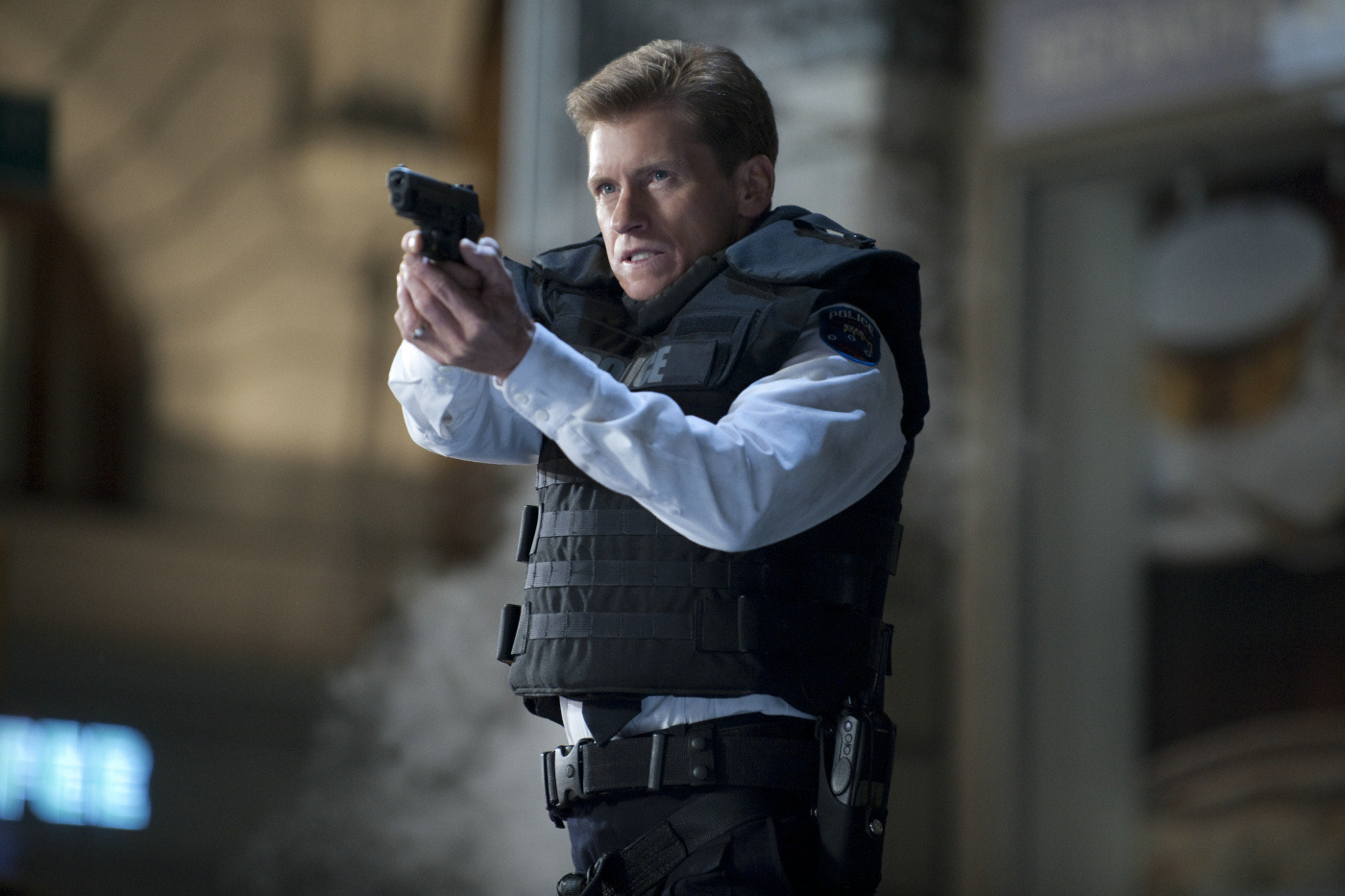
Denis Leary) happens to be a Captain on the NYPD and he is handling the case of the costumed vigilante, Spider-Man. So, to recap: Peter gains super-powers by trespassing, indirectly leads to the death of his uncle, directly leads to Dr. Connors mutating himself, finds a girlfriend, and his girlfriend's dad is hunting down Pete's alter-ego.
 |
| ...which isn't hard if you don't wear a mask |
The acting in
The Amazing Spider-Man is surprisingly good. I mean, yes, the caliber of actors is very solid here, but the performances are good, given the material. As far as I can tell, this is the first real starring role for Andrew Garfield, and I really liked his take on Peter Parker. His awkwardness around Gwen bordered on mild retardation, but aside from that I thought he was believable as A) a teen B) a smart teen and C) a smart teen who would throw on pajamas and fight crime. Oddly, his best moments as Spider-Man came with his mask off. And I liked that they didn't bulk Garfield up too much for this part; it was nice to see a lanky Spider-Man, in line with the whole "Puny Parker" lines from the 1960s comics. Emma Stone definitely impressed me as Spidey's love interest. It was nice to have a female lead in a superhero movie that wasn't vapid or whiny. I would have liked to see more of Stone and Garfield together on-screen, because they have good chemistry, but the script kind of forces them into intimacy and that felt rushed.
 |
| Tending gaping chest wounds = sexxxy |
Rhys Ifans was fine as Dr. Curt Connors. He wasn't great, but he played up to the script well enough. Unfortunately, that script didn't make him a particularly effective villain, for reasons I'll detail later.
Martin Sheen and
Sally Field played Peter's Uncle Ben and Aunt May, respectively, and they were definitely solid. I liked Sheen, but was surprised at how unimportant Field felt in the overall plot. Denis Leary was okay as a hard-line cop, I guess; he was intimidating enough as Gwen's dad, but it's not like his role was all that demanding. I was genuinely surprised to kind of like Chris Zylka as Pater's bully, Flash. Zylka wasn't fantastic, but his character actually seemed human and multifaceted, and at least some of the credit belongs to the actor. That's it for the important performances. There were a couple of noteworthy/bewildering bit parts, though.
Irrfan Khan played a vaguely sinister henchman to an otherwise absent Norman Osborn, which is fine, but I would have preferred that he actually seemed mean instead of a bureaucratic jerk.
Campbell Scott shows up with
Embeth Davidtz as Peter's parents and they don't do very much. I kept expecting them to do more than look concerned in flashbacks, but no.
 |
| I was also waiting for Wesley Snipes to kill Edgar Friendly, but again, no. |
This is only director
Marc Webb's second feature film, after the too clever but charming
500 Days of Summer. This is an interesting follow-up, to say the least. A lot of focus in the advertising campaign for
The Amazing Spider-Man was spent on the web-slinging scenes, specifically the point-of-view sequence. That was justifiable, since those were both pretty cool. Webb's biggest strength, though, was definitely the character work. I thought Garfield's performance was very good and the relationships Peter forms in the film, while rushed, still felt genuine.
 |
| In this case, genuine confusion |
One of the things that I liked best about this movie was the script. It wasn't fantastically witty or remarkably paced --- honestly, I think it tried to fit in a few things too many and there were too many cliches --- but I loved the overall feel of it. In a lot of superhero movies, the hero stands up to the villain because...well, because nobody else can. Here, it is because Peter feels
responsible for the villain. I also liked the shift toward a more tightly-knit Spider-Man universe (Spideyverse?), with everything appearing to tie into Norman Osborn. Heck, I even liked the choice to not show Osborn in the film; the Green Goblin is the best Spider-Man villain and deserves to be built up to. I was happy to see the story keep Peter in high school, because it makes his life that much more complicated. I liked the little things that made Peter's invention of his web-shooters less improbable, too.
 |
| Not likely, but less unlikely |
Basically, I liked the idea behind
The Amazing Spider-Man. It is significantly different than Sam Raimi's trilogy and actually deserves to exist and be appreciated. They could have waited more than five years before rebooting the franchise, but this is still a fun and pleasant surprise.
Having said all that, this is still only my third-favorite
Spider-Man movie. My biggest problem is the villain, Dr. Connors/The Lizard. Before the transformation, Dr. Connors was a pretty nice character with a very subtle undercurrent of something disturbing or desperate. That undercurrent never really becomes more pronounced as the film goes on. That would be fine, expect for the fact that he is the villain of the damn movie. I didn't like the choice to make the Lizard persona highly intelligent; I honestly would have preferred The Lizard be more of a physical threat that Spider-Man had to outsmart. I didn't like that The Lizard's evil plan was to transform normal humans into reptile people, which is bad because...um...it leads to sitcoms?

Actually, we don't see much of anything bad happening to the people who are transformed. If we saw reptile-people mindlessly tearing up Queens or serving as The Lizard's loyal army, I could see the threat. The way it is presented in this movie is as an inconvenience; one minute, people are transforming, the next they are recovering from the transformation and being happy. The film goes to such great lengths to establish Peter's sense of responsibility, but the personal threat The Lizard poses to him simply is not very compelling. I also hated his lizard face. Terrible design.
 |
| Bars can only improve The Lizard's appearance |
And then there's the action. While the web-swinging was fun, a lot of the action sequences --- particularly the ones with Peter Parker doing things out of costume --- were not that cool. They added a little comic relief, sure, but they were oftentimes too over-the-top for my taste (anything with Peter and sports, I'm looking at you). Another issue that ties into the action sequences is the inconsistent CGI effects. As good as Spider-Man looked when traveling around the city, I was not very impressed by him in the battle sequences, particularly the final fight. The scenes aren't bad, but they lacked the essential cool factor that fight scenes need. I thought the fight scenes paled in comparison to some of the more creative small moments, like the cleverness of Spidey's web in the sewers. I also saw this in 3D and I can assure you that the 3D is completely useless in this movie, save for the truly awful freeze-frame ending.
So how does
Amazing compare to Raimi's
Spider-Man? It's not as good because it doesn't deliver the complete package.
Amazing has a better cast with an overarching story that promises to be better than that of the adjective-less trilogy and a Peter Parker that doesn't feel dated and stereotypical. But Raimi's movie came out swinging and didn't hold back the best characters for a future installment. The film, as a whole, is also less fun; I know for a fact that I have quoted Willem Dafoe dozens of times from that first film, but there is no single character that I loved this time around. Still,
The Amazing Spider-Man managed to make me not resent its existence and I enjoyed watching it. Who knows? With a proper villain, the next sequel might be the best Spidey film yet.
Oh, if you have any theories who the mystery man in the credits sequence was, leave a comment. I own a few hundred
Spider-Man comics, and even I can't make a convincing argument for any particular character. What a waste of a teaser scene.