Twenty-three years ago, the modern comic book movie genre was invented with Tim Burton's Batman. Aside from the Batman franchise, though, not a whole lot good came out of the success of that first film over the next decade. It wasn't until 2000's X-Men that we started to see that initial promise start to blossom; it wasn 2002's Spider-Man, however, that made the super-hero movie into the Summer juggernaut that it is today. I will admit that I absolutely love the first Spider-Man. It was fun, dramatic, campy, and had a great cast. Not necessarily an all-star cast, but they fit the tone perfectly. To this day, I can't hear the Lord's Prayer without adding "Finish it!" in a Green Goblin voice. Spider-Man 2 is a better story with a less ridiculous villain; it is up to your personal tastes as to which movie is preferable. Spider-Man 3, though, is utter crap. However bad that last entry was, though --- "laughably bad" is too generous --- only five years have passed since its failure and this series reboot. Well, let's be honest --- there was going to be a reboot no matter how good the third movie was. The question remains, how necessary is this movie?
Okay, that's not a bad trailer. It really grabs that portion of the audience who have always thought "Enough of this Spider-Fellow, what about his parents?"
I have some bad newsfor all those audience members who were hooked by the mystery of the Parker Parents. This movie doesn't answer any of the questions that trailer raises. Sorry. Instead, The Amazing Spider-Man introduces us to Peter Parker (Andrew Garfield), a slightly nerdy high schooler with a taste for skateboarding and photography. Peter isn't the coolest kid around, but he's not unpopular, either. He is, though, very bright. When Peter accidentally finds a briefcase belonging to his mysterious late father, he uncovers some scientific papers detailing the possibilities of cross-species genetic bonding; in other words, Pete's dad was interested in splicing animal genes with human genes. Looking into his father's research leads Peter to Dr. Curt Connors (Rhys Ifans), who was Richard Parker's one-armed research partner. Unfortunately, Peter doesn't introduce himself right away; instead, he sneaks into Connors' research facility and gets bitten by a genetically enhanced spider. Almost immediately, Peter realizes that he now has super spider-powers.
Including the ability to pick on handicapped jocks
After reading up on (and understanding) his father's research, Peter decides to share part of it with Dr. Connors. This leads to a typical comic book situation: an otherwise very intelligent person opts to test an experimental treatment on themselves because it is too dangerous for others.
Yeah. Astonishingly stupid. I know.
Connors introduces a reptile gene splice to his system and he turns into a giant, intelligent Lizard because, you know, comic books. Meanwhile, Peter has harnessed his super abilities to become a costumed vigilante. Why? Because that's what you do when you're a moody teenager and your actions indirectly lead to your Uncle Ben (Martin Sheen) dying. I believe it was Ben's dying wish that Peter get shot at by the police while wearing spandex.
Note: Uncle Ben never actually liked Peter
While all this is happening, Peter is also getting himself awkwardly entangled in a teenage romance. The smart, sexy, and apparently allergic to pants Gwen Stacy (Emma Stone) finds herself strangely drawn to the ridiculously awkward Peter, especially once his super-powers give him the confidence to be kind of a jerk.
Seriously, no pants, just skirts. That's not a complaint.
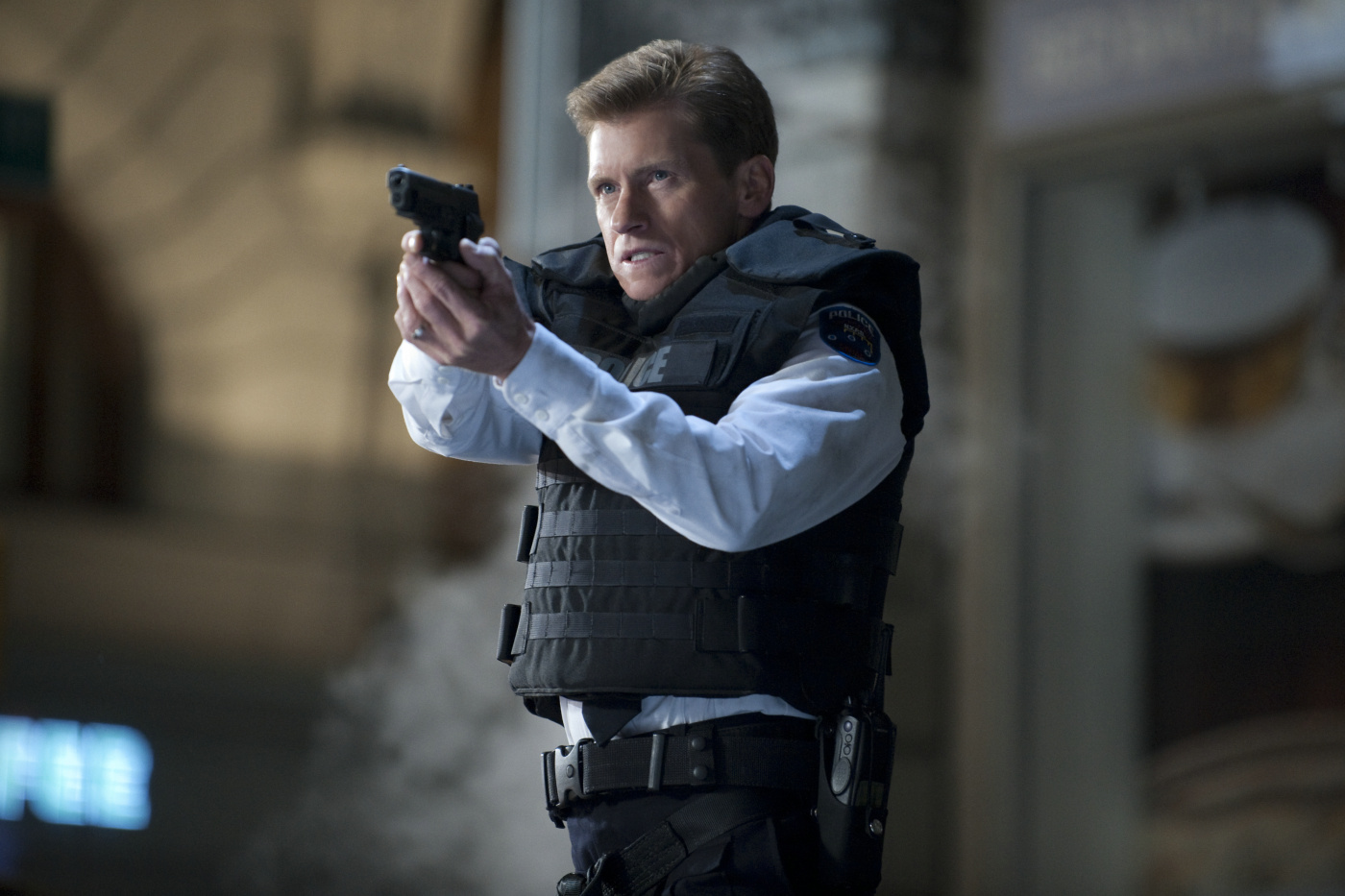
In typical Parker luck, Gwen's dad (Denis Leary) happens to be a Captain on the NYPD and he is handling the case of the costumed vigilante, Spider-Man. So, to recap: Peter gains super-powers by trespassing, indirectly leads to the death of his uncle, directly leads to Dr. Connors mutating himself, finds a girlfriend, and his girlfriend's dad is hunting down Pete's alter-ego.
...which isn't hard if you don't wear a mask
The acting in The Amazing Spider-Man is surprisingly good. I mean, yes, the caliber of actors is very solid here, but the performances are good, given the material. As far as I can tell, this is the first real starring role for Andrew Garfield, and I really liked his take on Peter Parker. His awkwardness around Gwen bordered on mild retardation, but aside from that I thought he was believable as A) a teen B) a smart teen and C) a smart teen who would throw on pajamas and fight crime. Oddly, his best moments as Spider-Man came with his mask off. And I liked that they didn't bulk Garfield up too much for this part; it was nice to see a lanky Spider-Man, in line with the whole "Puny Parker" lines from the 1960s comics. Emma Stone definitely impressed me as Spidey's love interest. It was nice to have a female lead in a superhero movie that wasn't vapid or whiny. I would have liked to see more of Stone and Garfield together on-screen, because they have good chemistry, but the script kind of forces them into intimacy and that felt rushed.
Tending gaping chest wounds = sexxxy
Rhys Ifans was fine as Dr. Curt Connors. He wasn't great, but he played up to the script well enough. Unfortunately, that script didn't make him a particularly effective villain, for reasons I'll detail later. Martin Sheen and Sally Field played Peter's Uncle Ben and Aunt May, respectively, and they were definitely solid. I liked Sheen, but was surprised at how unimportant Field felt in the overall plot. Denis Leary was okay as a hard-line cop, I guess; he was intimidating enough as Gwen's dad, but it's not like his role was all that demanding. I was genuinely surprised to kind of like Chris Zylka as Pater's bully, Flash. Zylka wasn't fantastic, but his character actually seemed human and multifaceted, and at least some of the credit belongs to the actor. That's it for the important performances. There were a couple of noteworthy/bewildering bit parts, though. Irrfan Khan played a vaguely sinister henchman to an otherwise absent Norman Osborn, which is fine, but I would have preferred that he actually seemed mean instead of a bureaucratic jerk. Campbell Scott shows up with Embeth Davidtz as Peter's parents and they don't do very much. I kept expecting them to do more than look concerned in flashbacks, but no.
I was also waiting for Wesley Snipes to kill Edgar Friendly, but again, no.
This is only director Marc Webb's second feature film, after the too clever but charming 500 Days of Summer. This is an interesting follow-up, to say the least. A lot of focus in the advertising campaign for The Amazing Spider-Man was spent on the web-slinging scenes, specifically the point-of-view sequence. That was justifiable, since those were both pretty cool. Webb's biggest strength, though, was definitely the character work. I thought Garfield's performance was very good and the relationships Peter forms in the film, while rushed, still felt genuine.
In this case, genuine confusion
One of the things that I liked best about this movie was the script. It wasn't fantastically witty or remarkably paced --- honestly, I think it tried to fit in a few things too many and there were too many cliches --- but I loved the overall feel of it. In a lot of superhero movies, the hero stands up to the villain because...well, because nobody else can. Here, it is because Peter feels responsible for the villain. I also liked the shift toward a more tightly-knit Spider-Man universe (Spideyverse?), with everything appearing to tie into Norman Osborn. Heck, I even liked the choice to not show Osborn in the film; the Green Goblin is the best Spider-Man villain and deserves to be built up to. I was happy to see the story keep Peter in high school, because it makes his life that much more complicated. I liked the little things that made Peter's invention of his web-shooters less improbable, too.
Not likely, but less unlikely
Basically, I liked the idea behind The Amazing Spider-Man. It is significantly different than Sam Raimi's trilogy and actually deserves to exist and be appreciated. They could have waited more than five years before rebooting the franchise, but this is still a fun and pleasant surprise.
Having said all that, this is still only my third-favorite Spider-Man movie. My biggest problem is the villain, Dr. Connors/The Lizard. Before the transformation, Dr. Connors was a pretty nice character with a very subtle undercurrent of something disturbing or desperate. That undercurrent never really becomes more pronounced as the film goes on. That would be fine, expect for the fact that he is the villain of the damn movie. I didn't like the choice to make the Lizard persona highly intelligent; I honestly would have preferred The Lizard be more of a physical threat that Spider-Man had to outsmart. I didn't like that The Lizard's evil plan was to transform normal humans into reptile people, which is bad because...um...it leads to sitcoms?
Actually, we don't see much of anything bad happening to the people who are transformed. If we saw reptile-people mindlessly tearing up Queens or serving as The Lizard's loyal army, I could see the threat. The way it is presented in this movie is as an inconvenience; one minute, people are transforming, the next they are recovering from the transformation and being happy. The film goes to such great lengths to establish Peter's sense of responsibility, but the personal threat The Lizard poses to him simply is not very compelling. I also hated his lizard face. Terrible design.
Bars can only improve The Lizard's appearance
And then there's the action. While the web-swinging was fun, a lot of the action sequences --- particularly the ones with Peter Parker doing things out of costume --- were not that cool. They added a little comic relief, sure, but they were oftentimes too over-the-top for my taste (anything with Peter and sports, I'm looking at you). Another issue that ties into the action sequences is the inconsistent CGI effects. As good as Spider-Man looked when traveling around the city, I was not very impressed by him in the battle sequences, particularly the final fight. The scenes aren't bad, but they lacked the essential cool factor that fight scenes need. I thought the fight scenes paled in comparison to some of the more creative small moments, like the cleverness of Spidey's web in the sewers. I also saw this in 3D and I can assure you that the 3D is completely useless in this movie, save for the truly awful freeze-frame ending.
So how does Amazing compare to Raimi's Spider-Man? It's not as good because it doesn't deliver the complete package. Amazing has a better cast with an overarching story that promises to be better than that of the adjective-less trilogy and a Peter Parker that doesn't feel dated and stereotypical. But Raimi's movie came out swinging and didn't hold back the best characters for a future installment. The film, as a whole, is also less fun; I know for a fact that I have quoted Willem Dafoe dozens of times from that first film, but there is no single character that I loved this time around. Still, The Amazing Spider-Man managed to make me not resent its existence and I enjoyed watching it. Who knows? With a proper villain, the next sequel might be the best Spidey film yet.
Oh, if you have any theories who the mystery man in the credits sequence was, leave a comment. I own a few hundred Spider-Man comics, and even I can't make a convincing argument for any particular character. What a waste of a teaser scene.
1976 was a big year for Jodie Foster. She had her breakout role in Taxi Driver, a commercial hit with Freaky Friday, and she made The Little Girl Who Lives Down the Lane, a horror/thriller. Kudos, Jodie, for adding variety to your work schedule. Variety might be the spice of life, but that's usually said when the variety is pleasant; you don't say that after someone get punched in the face, right? Unless you're the one doing the punching, I mean. In that case, you're awesome.
Rynn (Jodie Foster) is celebrating her thirteenth birthday alone on Halloween. The doorbell rings, and at the door is Frank Hallett (Martin Sheen), the son of the woman who is renting the house to Rynn and her father, a poet. Frank is obviously a pedophile and he is definitely on the prowl; he more or less forces his way into the house and makes some not-so-subtle passes at Rynn.
Side note: If there is a good thing about pedophiles in popular media, it is that they're not very difficult to pick out. That creepy guy who touches your hair and smells you? Don't accept a ride home from him, kids.
While Rynn threatens to wake her father up, the appearance of Frank's trick-or-treating kids is the main reason Frank leaves. Rynn doesn't go to school, her father is never seen out of the house, and some of the townsfolk are starting to get a little curious. Cora Hallett (Alexis Smith), the landlady and Frank's mother, is one of those people. When Mrs. Hallett inquires about Rynn's father a few days later, Rynn says that he is in New York, meeting with a publisher. That doesn't sound fishy at all, does it? And while Mrs. Hallett is snooping around the house, Rynn won't let her into the cellar. Of course, that means that Mrs. Hallet just must take a look. She does, but she sees something horrible and, in her panic, accidentally knocks the support rod for the cellar door; the door hits her in the head, killing her. That sucks. I guess Rynn will have to call the police, explain the situation and hope they agree that it was an accidental death. Or she will hide Mrs. Hallett's body in the cellar and cover any evidence of her visiting the house that night. Why would a little girl do that? What exciting adventures await young Rynn? You'll have to watch to find out! Or, I could tell you: she pops her cherry with a limping kid, has a battle of wits with a pedophile, and explains the importance of preservatives.
The screenplay was written by Laird Koenig, who also wrote the novel this film is based on. On the bright side, the movie never gets too ridiculous; Rynn is never revealed to be a demon witch or anything. This is definitely a movie that wants to slowly build suspense and make its characters feel the claustrophobia of the proverbial walls of their lives closing in. Despite being only 100 minutes long, though, this movie feels like it takes forever. Taking forever is usually a sign of a failure to build suspense properly, so I'm going to make a radical claim and say that director Nicolas Gessner's pacing was underwhelming.
The acting is pretty good, but nothing spectacular. Jodie Foster was Jodie Foster, although she was definitely still a child actor in the movie. She wasn't bad, just unintentionally awkward in parts. Oh, and in case you were weirded out by her nude scene here at age fourteen, chillax --- that was her older sister. Foster's slight hesitancy in this role (and not Taxi Driver that same year) leads me to believe that this wasn't one of her favorite movies. I have no facts to back that up, it's just a hunch. Martin Sheen turns in a good performance as a creepy child molester. His version, though, is a lot craftier than most film pedophiles. Not more complex (he's still unquestionably the one-dimensional bad guy), but definitely smarter. Congratulations, Martin. You're a great pedophile. The rest of the small cast was just okay. Mort Shuman, author of "Viva Las Vegas," plays a local policeman, and does so in a straightforward way. Alexis Smith plays the unsympathetic Mrs. Hallett unsympathetically. Aside from how eerily well Sheen plays his part, the rest of the cast basically just reads their lines.
I like the idea of this movie much better than the execution. Why is this girl alone, and why does the poster claim that everyone who knows her secret is dead (not true, by the way)? The movie poster implies that this will be a tale terror and intrigue, but it's really not. And that's the problem. There are some horror elements and a plot twist that you will almost definitely see coming. SPOILER: Rynn doesn't want people in the basement because that where she keeps the dead bodies. Yes, the heroine is shown killing people in a sympathetic light. Not because they deserve it, but because she deserves to be free. If that makes you confused, watching the movie won't make it any better. The justification for that twist is sorely lacking. Actually, the justification for the entire premise is pretty weak. This is a movie that is plot-driven, so it's not a problem that only Martin Sheen gave a good performance. However, plot-driven movies need to have well-written and paced plots, which this lacks.
Mike Nichols is a gifted director with a flare for filming great dialogue, as best seen in Who's Afraid of Virginia Woolf? and Closer. Joseph Heller's Catch-22 is a novel that is brimming with witty dialogue, absurd logic, and has a complex tangle of plot threads. If anyone could do justice to it on the big screen, Mike Nichols was the man. At least, that would make sense. But, as the titular catch in the book indicates, following logic doesn't necessarily get the results you want.
Catch-22 is the story of Yossarian (Alan Arkin), a bombardier in the US Air Force during World War II. Yossarian comes to the conclusion that he does not want to be in the Air Force any more. Why? Because, when he flies his missions over Italy, people keep trying to kill him and eventually will succeed. His commanding officer, Col. Cathcart (Martin Balsam), keeps raising the required number of flight missions for his men, eventually more than tripling the average number of flights the Air Force requires before rotating experienced pilots out for rest. The only way out of the Air Force, then, is to die or be declared insane. Unfortunately, the unit doctor can't help because the Air Force has established rules for determining sanity. Since only a crazy person would want to keep flying dangerous missions, wanting to get out of the Air Force is sane, but you can't leave the Air Force unless you're insane, but if you're insane you will want to stay in the Air Force and keep flying dangerous missions, etc. The official description for that circular logic is Catch-22. The unspoken question is how anyone can escape that logic.
There's more to the movie than that, of course. Military leaders are shown to be inept, corrupt, and stupid. Bob Newhart plays Major Major Major Major, who doesn't know what to do as a Major, so he hides and avoids his duties at all times; when he's in the office, no one can see him --- they can only see him when he has left the office. That's his catch. Col. Cathcart not only keeps his pilots in the flight rotation far too long, but he and Major Danby (Richard Benjamin) are involved in selling military goods for profit. Orson Welles makes a brief appearance as General Dreedle, who doesn't understand why he cannot have a subordinate shot for annoying him.
Yossarian's fellow soldiers are similarly bizarre. Charles Grodin plays a very mild man who eventually fails to see the difference between killing in combat and murder, and isn't distressed by either. Art Garfunkel embodies the stereotypical movie image of an American soldier: brave, honest, faithful, and very naive. Martin Sheen's character seems pretty realistic, but the irrationality of war begins to affect him. Jon Voight plays Milo, who works in the mess hall. From there, Milo builds up a trading empire, swapping equipment (like parachutes) for better food or for art or money or whatever. Milo is so effective that he and his superiors, Danby and Cathcart, end up allowing the Italians to bomb their base to make a profit. All the while, Yossarian becomes more and more neurotic. He tries to crazy his way out of the Air Force by walking around nude. He tries to do do it by insulting his officers. Nothing ever works, though. In fact, the only man crazier than Yossarian is his buddy, Captain Orr, who has such a talent for getting shot down and splash landing in the ocean, that he claims to just be practicing.
That kind of sums up my feelings for this movie. There's a lot going on, but nothing really works. I liked a lot of the performances, especially Charles Grodin and Anthony Perkins (who plays a chaplain), but the movie never really gels. The glaring problem is with the story. I haven't read Heller's novel in years, so I'm not upset that they chose to significantly change the story (entire plot threads were dropped, characters swapped speeches, etc.). I am upset that they chose to change the story so poorly. Buck Henry (who also plays Lt. Col. Korn) is a talented writer, the creator of Get Smart and the screenwriter for The Graduate. On paper, he seems like a good choice to simplify Heller's complex story, but the result is a disjointed mess. The movie ends up breaking into three distinct parts. The first part is goofy and randomly funny. I liked that part. The second part is serious and overwrought. The third part is an out of left field ending. I guess that could also be the story arc for The Graduate, too, but it's more disturbing here. My problem is with the second arc. I get it. War is hell. What I don't get is why it became so hellish after being absurd for the first 45 minutes of the movie. It would have been much more effective if the crazy decisions made by characters in the first third of the movie directly lead to the serious events; that would have allowed us to see the two parts as connected and contrasting. Instead, it seems fairly abrupt and random.
Mike Nichols shoulders a lot of the blame for the feel of this movie. The sound is intentionally obscured at times, with characters having witty conversations while a jet engine obscures what they are saying. That's just annoying, unless there's a punchline or some symbolism that is being hammered home. There doesn't seem to be. I liked Alan Arkin's performance, but I disagreed with the direction; if the whole point of the movie is that Yossarian is the sane guy, he should not act increasingly neurotic. That's a pretty basic failure on both Nichols' and Arkin's part. Both the book and the movie jump around in time, but the book does so in a cyclical fashion, elaborating on scenes with different perspectives. Here, only one particularly sad scene gets replayed, but it happens over and over again. Nichols' golden touch for dialogue remains strong as ever, with every character having several funny lines with impeccable timing, but that's only important in the funny first third of the film. After that, we are left with some pretty soul-sucking stuff, and it doesn't have the impact that I'm sure Nichols intended.
This should have been a great movie. It has the director, the screenwriter, the source material, and the actors needed to make a classic. What resulted was far less than the sum of its parts. It's not terrible, but it should be great. The repetitious scene is a great illustration for what is wrong with the movie. Perspective is key to this story, right? What is logical to one person is illogical to the next. Therefore, it would be both interesting and potentially funny to see the same scene from different characters' viewpoints. Instead of using this cinematic tool to enlighten and amuse, though, Nichols chooses to club the audience with the notion of war being bad. This movie is witty and fast-paced, but it's not enough. Maybe Nichols and Henry should have taken a more literal inspiration from the source material and had the script follow a circular path. I absolutely believe that Catch-22 can be made into a great film, but this definitely isn't it.