Showing posts with label Wes Craven. Show all posts

Sunday, October 27, 2013

A Nightare On Elm Street (1984)

I have a confession to make.  I haven't been spreading my love equally across the great horror franchises.  When I started this blog, I quickly reviewed a few of the original Nightmare movies, but I got distracted by shiny objects and never really got back on track.  In the meantime, I have reviewed every single Friday the 13th and most of the Halloweens.  Out of a sense of fairness, it is high time I returned to the A Nightmare On Elm Street franchise, and where else should I start, but with the original?

A Nightmare On Elm Street begins with a mysterious figure crafting an all-purpose murder glove in a boiler room somewhere.  Coincidentally, Tina () has a nightmare where she is chased by a mysterious figure wearing a murder glove!  It's always nice when you don't have to wait for plot points to pay off.  Tina runs from this creepy, fedora-and-ugly-sweater-wearing, razor-gloved meanie, but he catches up with her.
Maybe he just wants a hug
Right when he is about to kill her, Tina wakes up screaming in bed.  It was just a dream!  Except...her nightgown has slash marks in it, right where her nightmare man cut her!  Dum-dah-DUMMMMMM!!!  On a side note, teenagers wear nightgowns?  Anyway, Tina's not the only teen having dreams like this.  Her boyfriend, Rod (), her friend, Nancy (), and Nancy's boyfriend, Glen (, in his film debut), have all been having nightmares; despite Tina being openly creeped out by her dream, none of her friends comes forward and admits to having similar nightmares because teenagers don't have empathy.
Or props that make sense in their scenes.  What is with the birds by the boombox?
Since Tina makes such a big deal about her dream, Nancy and Glen agree to keep her company while her parents are out of town.  Rod shows up, too, just in time for some sex scenes that sound remarkably like people trying very hard to sound like they're having all the sex in the world.  After Rod finishes pleasing his woman, this happens:
He becomes the Magneto of flesh?
An invisible attacker slices the hell out of Tina and then, just for giggles, reverses her personal gravity; this was done presumably to force her family to clean her bloody footprints off the ceiling, which looks suspiciously like a deck.  That's when things go a little crazy.  The police, led by Nancy's estranged police lieutenant father (), assume that Rod killed Tina (...on the ceiling...?) because he was the only one in the room.  Rod eventually gets caught and winds up in prison, but not before admitting to Nancy that he has had nightmares about a man with a razor bladed murder glove.  This blows Nancy's mind.  To be fair, it should.  That night, as she is dreaming, Nancy watches Mr. Razorfingers entering Rod's cell, preparing to kill.  When she wakes, Nancy knows that Rod is in danger, but no one believes that an invisible dream monster is going to attack him.  They should have, because Nancy was right.  After this point, Nancy is a teen on a mission: stop this mysterious dream monster!  Or at least find out who he is!
...before he falls through that latex wall and lands on her damn head!

The acting in A Nightmare On Elm Street is not very good.  In the lead role, is pretty awful and sadly doesn't die (or does she...?).  She didn't annoy me, but she's not very likable and has trouble with any part of her character that can't be described as a "wet blanket."  was a little better as Tina, although she was also pretty basic.  was one-dimensional, but his one dimension was that of an insensitive rebel-type, and he did that fairly well.  wasn't much better, with some of his line readings (especially "WoooOOOOoooo") being painful to watch.  On the bright side, his character didn't demand much acting, and Depp at least managed to get the most memorable death scene in the film.
If you're not going to be good in a movie, at least try to die well
spends most of this movie in the shadows as the evil Fred (not Freddy) Krueger.  Freddy doesn't display his trademark humor or cackle much in this first entry, but I think some of the visuals with Freddy are at their most iconic here.
That's a great introduction shot
Still, Englund isn't at his best here, if only because the script is not sure what direction they want the character to go; Freddy is a presence in this movie more than he is an actual character.  actually headlined this movie, which is hilarious in retrospect.  In turn, he was about as good as John Saxon normally is --- he's a perfectly acceptable B-movie actor.  Rounding out the main cast, was absolutely horrible in every conceivable way as Nancy's alcoholic mother.  In all fairness, her character is terrible.  Still, Blakely should be able to act circles around Heather Lagenkamp (she is an Oscar nominee, after all), and that just doesn't happen here.

A Nightmare On Elm Street was written and directed by , after he read about (I shit you not) Asian Death Syndrome.  The basic idea here is a chilling one: what if the danger in your dreams was real?  As such, Craven goes out of his way to make a menacing villain, and he does so with some great visual scenes.
That's not Freddy.  That's a subtle warning to not date Nancy.
As far as his direction of the actors goes, Craven did a pretty awful job.  I honestly couldn't tell you if this cast had their lines memorized or were using cue cards.  The pacing in the film is okay, but it's a little slow for a slasher movie.  And that's what this is, oddly enough.  There are elements in the plot that could have made this far more suspenseful and frightening, but Craven opted for a simpler (and dumber) take.  I like the basic idea, but it's not very scary, exciting, or unpredictable, despite having the whole dream monster angle.

The special effects in A Nightmare On Elm Street had some definitely good moments, but it's pretty inconsistent overall.  Glen and Tina's death scenes are pretty great, no doubt about it.  I don't know what it is that makes them so memorable --- is it just the fact that they wind up on the ceiling? --- but they definitely stand out in the genre.  I also really like the moments where the audience is aware of Freddy's presence, but Nancy is not, like when he pushes his face in the wall above her bed, or when she is sitting in the bathtub.  Unfortunately, there are also moments like this:
Unless those are expanding dildos coming out from his shoulder, I'm not impressed
Why is it supposed to be frightening that Freddy can walk slowly with cut-rate Stretch Armstrong arms?  There are other moments that are okay, but have definitely aged a bit over the years.
Is that supposed to be silly putty?
On the whole, though, I think the look and feel of the special effects scenes work pretty well, even twenty-nine years later.

What about the horror, though?  For being a slasher movie, the Nightmare movies have always had a fairly low body count, and A Nightmare On Elm Street definitely sets that precedent.  Four people officially die in this movie.  Granted, two of those kills are pretty awesome, but...just four?!?  LAME. Worse than the low blood and gore count is the fact that this film completely ignores the easiest and most fun possibility for horror: the dreams.  Aside from a few bits with Nancy dreaming about Tina's talking corpse, the only dreamscape we see is Freddy's Land of Boiler Room Fun.  Dreams offer so many possibilities and even one good, weird one would have made a huge difference to the tone of this movie.  It might have even added *gasp* suspense to this slasher pic!

Don't get me wrong, A Nightmare On Elm Street is definitely better than most movies starring Freddy Krueger (noteworthy exception: Freddy Vs. Jason).  I just had a memory of it being actually good instead of just promising.  Really, how many horror franchises have a villain that has at least a kernel of justification in his back story?  Yes, he was evil, but the dude got lynched --- that may not be the best reason to kill teenagers, but at least he has a small excuse.  Unfortunately, most of the promising ideas aren't fully formed.  What makes Freddy Krueger stand out from his slasher movie brethren is his personality, and that is sorely missing from this movie.  Well, that and any logic whatsoever when it comes to when Freddy can kill you --- I'm pretty sure that only one person was actually asleep when they died, which makes no sense.  Even considering its many shortcomings, A Nightmare On Elm Street does have a unique feel to it, which goes a long way for the discerning fan of 80s horror movies.  Is it a classic?  I wouldn't say that, but it has its moments.

Tuesday, October 22, 2013

Scream 2

Scream was great.  It mocked horror cliches, but also paid tribute to them; the script was sassy and clever; the villain had a fairly unique gimmick, but was still anonymous enough --- with an easily removed costume and small weapon --- for there to be a legitimate whodunnit mystery.  All in all, it is a fun watch.  Inevitably, a sequel was greenlit and filmed as soon as possible.  Scream 2 came out less than a year after the original film, and expectations were high.  How high?  The female cast were featured in a Rolling Stone cover article:
With these choices, it is obvious that Tori Spelling should be on the magazine cover.  Whaaaa...?!?
I don't really follow what exactly is supposed to be going on in that picture --- are they happily cleaning up after a triple homicide? --- but it does help prove one thing: when it comes to sequels, dumb things happen.

In an unusual bit of theatrical time-keeping, the events of Scream 2 takes place two years after Scream, even though the actual films were released less than a year apart.  Sidney () is now in college and has a group of friends that have not tried to murder her (yet), just a reminder that college is way more fun than high school.  Unfortunately for Sidney, heartless bitch/reporter Gail Weathers () wrote a book about the murders that took place in Scream and the book was turned into a movie called Stab that is just premiering.  That means Sidney gets a lot of prank phone calls from people mimicking the killers.  Thankfully, Sidney learned from her mistakes in the last film and nips that annoying subplot in the bud.
At the premiere of Stab --- the clips of which are pretty amusing --- the theater gives away promotional Ghostface costumes.  That seems like a pretty good idea for about ten minutes, until one of the many people dressed as Ghostface commits a double homicide in the theater.
Worst.  Glory hole.  Ever.
Of course, since this is a horror sequel, that is only the beginning.  Apparently, the killer is obsessed with the murders in Scream, which in turn makes the killing of Sidney a top priority.  That also puts targets on the backs of all her friends, too. 
Two out of three expendables characters in this scene realize it
With all that in mind, it occurs to Sidney and her friends that it is very likely that the killer has infiltrated their clique.  But which one of them is the killer question mark/exclamation mark/question mark.

The acting in Scream 2 is all things to all people, if that means that it's a crap shoot.  I actually thought improved slightly in her return to the role of Sidney.  It is difficult being a likable horror protagonist, but Campbell was able to portray a fairly intelligent and tough woman convincingly.  Again.  Of the returning characters, saw the most positive change.  This time, she actually shows human emotions and I wasn't necessarily hoping she would die.  She also had the biggest character makeover of the group, so she didn't look quite as trashy in this film.  reprised his role as the movie-obsessed nerdling and shocked me again by being decently entertaining.  If you cut the scene where he does mediocre impressions, I would even say that I liked him in this movie.  was okay, too, although I don't quite understand why the filmmakers chose to give him an exaggerated limp and Bob Dole hand.  I guess it was a red herring, and they did give a line of dialogue to explain it, but Arquette isn't a good enough acgor to play disabled and not have it be hilarious.
"Everybody knows you never go full retard"
Of the newbies, and had the most screen time.  O'Connell was a little vacant, but it fit his character.  Olyphant does not play a lawman of any sort, and if you know his filmography at all, you know that is not a good sign.  He gets to overact, which is fun enough to watch, but it wasn't anything special.  didn't have any lines in Scream, so his character felt new in the sequel.  Schreiber wasn't great.  His character is tough to like, and Schreiber was charmless in a complex part.  was inoffensive, but her character was extremely bland.  and were both okay as dual screaming victims.  Gellar's character was a little stupid, but not too annoying.  Pinkett Smith was extremely obnoxious, combining knowitallism with being a person who talks throughout the movie in the theater.
I'm offended by stereotypes, too, Jada
didn't come off much better, with his main characteristics being insensitivity and cheapness, but he did have a hilariously stupid death scene, and that counts for something.  was annoying as the suspiciously high-profile actor playing a relatively minor character, in grand Scooby-Doo tradition.  and were stereotypical sorority girls, although de Rossi's eyebrows did provide some of the film's biggest scares.  In fact, all of the sorority girls were horrifically dull, with only Sarah Michelle Gellar achieving anything beyond "generically bitchy."
My favorites are "judging bitch" (back, right) and "smarmy bitch" (far right)
There are also some entertaining cameos.  Pre-Dawson's Creek had a few solid lines in film class, and casting in a minor role was a nice nod to classic horror movies.  But the most entertaining cameos belonged to the movie-within-a-movie, Stab stretched her skills by playing a brainless blonde bimbo, and (following up on a gag in the first film) played the movie version of Sidney.  Both were chuckle-worthy, but was hilarious in the two lines he had, doing a surprisingly good job mocking Skeet Ulrich in Scream.

Wes Craven returned to Scream 2 as director and writer Kevin Williamson also returned.  With the creative forces behind the original film, as well as the surviving cast, all the pieces were in place to make Scream 2 a great sequel.  That didn't quite happen, though.  Craven did a solid job juggling a gigantic cast, and I thought the returning cast all acted better in this sequel...ignoring Arquette's limping.  Thanks to the advent of Caller ID, though, the best part of Ghostface's routine --- the phone calls --- largely lost its effect.  That meant that we had a silent killer that was missing his calling card. 
Yes, that was bad.  I'm sorry.  You may resume.
Sure, there were a few phone calls, but most of them were blatant I-want-you-to-know-I'm-watching-you ploys, with only Gellar's scene actually involving tension or scares.  Williamson's script, which was the driving force of Scream definitely feels less impressive in Scream 2.  I realize that the script had to be written quickly, but this just feels lazy.  There is less wittiness this time, and what smarts it has are largely recycled.  Did you like the characters asking each other who the killer is, using traditional horror movie logic?  Did you like the sassy female explaining how stupid horror movies are?  Did you like the killer with an incredibly flimsy motive?  Good, because Scream 2 gives you an extra helping of them.
Oh, you liked the phone scenes?  Well...sorry about that.
The kills aren't very much fun, either.  The sheer idiocy of Omar Epps' death --- the combination of stabbing through a stall and Omar having his face pressed right up to it AND doing the stabbing blind --- doesn't even compare to the boombox-toting hip hop dance troupe inadvertently covering up a murder on the quad.  That was jaw-droppingly stupid.  The script has all sorts of holes and terrible plot devices that stick out, scene after scene.  My least favorite scene was the car scene.  Craven does what he can to milk it of every ounce of suspense, but it's so horribly contrived that I just got mad and started rooting for the killer.  Almost as bad is the "everyone with a cell phone must be tackled" scene, where the potential murder victims conveniently forget that the person they're looking for should have some sort of voice-altering device, along with a phone, in their hands.  Ugh.  And then there's the "subtle" clue that tips you off as to the identity of one of the killers.  Oh!  And the second killer?  Yeah, I get the motivation, but if killer #2 is supposed to have killed more than one person in this movie, I'm calling bullshit.  There are a few moments of amusing self-awareness, like the Stab clips and some of Randy's scenes, that feel smart and clever, but they are sadly rare.  This script and plot, as a whole, kind of suck.  They're not godawful, because horror fans know you can do much much much worse, but this was extremely disappointing, coming from the team that made the original so much fun.

The original Scream had some violence and gore, but the light tone kept it from feeling too explicit.  Scream 2 doesn't really amp either up much.  I would say there is a similar amount of gore (with the quad murder being the most gruesome) and only a few more kills.  The set pieces for these scenes weren't that great, with the stage being the best of the bunch; I guess that makes the soundproofed room the worst, because they treated it like a maze instead of an auditory game of cat and mouse.
Look at Ghostface, Courteney.  He's as afraid of you as you are of him.
I suppose that there is enough violence to keep audiences interested, with ten kills overall, but something is missing.  Part of the problem is that some of the kills --- specifically the policemen --- seemed far too easy.  Another is that some of the showcased kills feel a little cheap.  I get it, serial killers don't have to be gentlemen, but at least three characters died while not looking at their killer.  I probably wouldn't care about that if the kills were more memorable or if the script kept things funny, but that's what happens to horror movies when the plot leaves you bored: you start thinking.  And that is rarely good for horror films.
"You know that thing where I frequently show off a movie camera?  You probably shouldn't think too hard about that."

I don't know.  I feel like I'm being too harsh on Scream 2.  I didn't hate the movie.  I was just expecting it to be a lot better.  That was frustrating, because there are a few genuinely good moments in this movie, and I'm glad that the more obvious suspects weren't the killers.  This is a mostly competent horror movie, I have to admit.  I just didn't enjoy it much.

Monday, October 7, 2013

Scream

I didn't grow up in a family that watched horror movies.  Aside from an occasional sleepover, I didn't watch horror movies until I was in college.  The movie that convinced me that I was, maybe, missing something was Scream.  Toward the end of my senior year in high school, a friend invited me over to watch a movie and she chose Scream.  I agreed, but was wary.  I wasn't trying to impress this girl, but I didn't want to embarrass myself either, by wetting my pants or shrieking like a schoolgirl.  For some unfathomable reason, I just assumed those were the options open to me.  But then I watched the movie and did not shriek --- it's none of your damn business about the pants-wetting --- but instead really enjoyed myself.  Seventeen years and three sequels have passed since its release; how has Scream held up?

Scream opens with one of the more famous scenes in modern horror.  Casey () is home alone when she receives a phone call.  Casey doesn't recognize the caller's voice, but he is playful and a little flirty, so she goes along with it.  The caller asks what her favorite scary movie is (and she somehow didn't choose Poison Ivy?!?) and everyone is having a good time...until the caller lets it slip that he's watching Casey.  In fact, the caller has captured her boyfriend and will kill him, unless Casey plays a sort of horror movie trivia game over the phone.  How did she do?  Let's just say that you don't want Casey on your Trivial Pursuit team.
"Orange!  No, *sob* red!"
It seems that the brutal slaying of Casey and her boyfriend were not the first of their kind in this area; a year ago, Sydney's () mother had been murdered and the case became a media phenomenon.  But, since high schoolers are sociopaths on their good days, Casey's presumed friends aren't terribly affected by the crime.  Instead, Sydney and her boyfriend, Billy (), are more worried about their sex-free relationship; Stuart () and Tatum () are concerned over who can be more stereotypically 90s;
The answer is "nipples"
and the media-oversaturated Randy (Jamie Kennedy) sees the events as a direct parallel to horror movies.  Against all odds, it turns out that Randy is right.  The killer is following horror movie logic, which means that people who break the cardinal "rules" of slasher flicks (promiscuous teens, people who announce that they will "be right back" when going somewhere alone, etc.) will pay for their sins.

On the surface, Scream is kind of a sketchy idea.  A horror movie about a killer who loves horror movies, and victims who are aware of horror movie cliches?  There is a high potential for snottiness and finger-quotes irony in that pitch.  Thankfully, director Wes Craven had already toyed with this notion in his last horror film, Wes Craven's New Nightmare, and got that out of the way.  Craven, along with writer Kevin Williamson, did a very good job keeping Scream from succumbing to its potential weaknesses.  The script had clever dialogue and a reasonably likable (by horror standards) lead character.  Craven directed his relatively young cast well, and none of the featured characters seemed terribly obnoxious or paper-thin.
Well, nobody was unusually obnoxious
There are several bits in this movie that Craven handles expertly.  The opening scene is probably (and justifiably) the most famous, but pretty much every subsequent extended sequence with the killer is well-balanced and suspenseful.  As a whole, the script's efforts to be funny undercut any prolonged attempt at creating atmosphere or a sinister tone, but that's not necessarily a bad thing.  Scream works because it is light and funny and because it plays along with the tropes that horror fans have known about for years.  I revisited this film, expecting the movie to have aged noticeably, but the only things showing their age are some of the costume choices.
Her "Dancing in the Dark" outfit has aged better than this
Well, okay...there is one noticeably stupid moment in this movie: the killer attacking Sidney in the bathroom in the high school.  For a killer that chose his moments pretty well in the rest of the movie, that just seemed gratuitous.

One of the things that separates Scream from its slasher movie brethren is its cast.  In the 80s and early 90s, a lot of noteworthy actors started out in horror movies, but established talent didn't stick around.  There isn't much prestige or acting challenge in the role of "Bust Campy Councilor #2."  Thanks to its script, though, Scream was able to attract some reasonably well-known talent.  The biggest name in the movie at the time (and even now) was Drew Barrymore, who was in the midst of her "bad girl" career renaissance.  Even better than having a big name actress was the fact that Barrymore took a role similar to Janet Leigh's in Psycho; by taking a smaller, more memorable role and nailing it, Barrymore set Scream up for success.  The rest of the cast is not quite as good, but not bad, either.  Neve Campbell's character has some angst, but she wasn't out of her depth when articulating those emotions, or showing a reasonable amount of intelligence.  I typically ignore people who clearly don't wash their hair in odd-numbered months, but wasn't half bad either.
That shirt will get washed before that hair
doesn't really do much, which is about par for course with her.  I will give her credit for having the stupidest death in the movie; if your character is boring in a horror movie, it's good to strive for a memorable kill scene.  She's really the worst actor in this movie, and that is shocking, given this cast.  The typically obnoxious comes off fairly cute and likable.  played a fairly one-dimensional character, but at least her character served a purpose in the plot. 
, who has never not been terrible, is actually okay; granted, he is just acting as a mouthpiece for the writer, pointing out all the horror movie cliches that Kevin Williamson wanted to mock, but credit where it's due.  Why it was decided that Kennedy should wear pastel hush puppies and do Jerry Lewis impersonations, I do not know, but the 90s were a very ironic time.  Even the always (ALWAYS!) annoying played his part well.
Maybe he should get stabbed in more movies?
There are a few teeny-tiny roles that are worth pointing out, as well.  had some lines and a death scene, even though his role was uncredited.  Less obvious was 's cameo, but the best bit part went to Wes Craven himself, as the Freddy Krueger-looking school janitor.  That was great.  Oh, and is also in the movie, but he doesn't actually say or do anything aside from glare, so he barely counts.

When it comes to the classic horror stuff, the sex and violence, Scream does some interesting things.  This is a violent movie, no doubt.  We see a few people getting disemboweled and there is a good amount of stabbing.  In other words, a lot of fake blood was spilled in Scream.
The worst was the blood swirlie Campbell got
Maybe it's the humor in the script, or maybe it is the fact that most of the kills aren't especially ridiculous, aside from Rose McGowan's, but it just doesn't feel all that violent to me.  Still, the blend of violence and humor keeps it interesting, even in the late-second-act wasteland that can drag down a lot of slasher pics.  While there isn't any gratuitous nudity, the script does speak of the evils of teenage sex; somehow, the self-awareness of the script is almost as enjoyable as random boobage.  The strangest thing about Scream is the fact that the killer is so bland.  When you hear the voice over the telephone, he is charismatic, funny, and a little frightening.  When you see Ghostface in the flesh, though, he's underwhelming.
Look at that face!  It looks like he's apologizing!
Ghostface (Killah) isn't a bad villian, per say, but Scream isn't iconic because of him.  Scream was a hit --- and is now working its way toward "classic" status --- because of the writing and the wit.  That's not a knock on the series, by any means, but it is a knock on Ghostface.

All in all, I was genuinely impressed with how well Scream stood the test of time.  Even though it has had three sequels and revitalized slashed movies in the late 90s, it still feels fresh.  The writing is still fun, and even the presence of a moderately anonymous killer doesn't dampen its impact.

Saturday, October 6, 2012

The Last House On the Left (1972)

31 Days of Horror: Day 6
I didn't read up much on The Last House On the Left.  That happens sometimes; I'll see a movie and decide to watch it on whim.  I was looking Wes Craven up on IMDb when I noticed that this was his first professional work as a director.  I like some of Craven's work, so that got me curious.  Then I learned that the film was officially rated X by the MPAA, which is kind of intriguing; even better, Wes Craven re-cut the film a few times and submitted it back the the MPAA, but they wouldn't give it a R --- so he effectively forged a R-rating approval and distributed the film anyway.  That is some ballsy stuff, right there.  Even if it's an urban legend, it's a great urban legend.  But what could possibly make this film so controversial?

The Last House On the Left begins with Mari (Sandra Peabody), on her seventeenth birthday, explaining her party plans for the night to her parents.  She's going into the big city for a concert with her friend, Phyllis (Lucy Grantham).  Her parents (Richard Towers and Cynthia Carr) don't like it --- the city can be dangerous, Phyllis is a bad influence, and Mari won't wear a bra --- but she's their little girl growing up, so they let her go. 
"Bad influence?  I'll drink to that!"
Meanwhile, there has been a prison break in the area and a group of notorious molesters/murderers/psychopaths are on the loose.  Krug (David Hess) is the ringleader, but he has a willing accomplice in the knife-happy Weasel (Fred J. Lincoln, who would go on to direct Bone Appetit: A Shemale Seduction) and a batshit-crazy audience in his girlfriend, (Jeramie Rain).  The odd man out in the group was Junior (Marc Sheffler), Krug's son; Krug keeps him obedient by controlling his heroin habit and the rest of the group treats him like a toadie. 
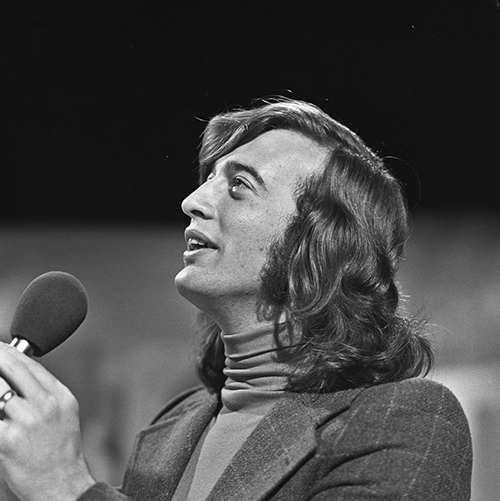
I didn't know Robin Gibb was a felon!
When the girls arrive in the city, they start looking around for someone who looks like they would sell the girls some primo weed.  They meet Junior, who tricks them into coming up to the group's apartment.
I guess I can understand why they thought he would have the good stuff
Things go downhill quickly from there for the girls.  While Krug and co. spend the evening raping the living hell out of Phyllis, Mari's parents are at home, setting up a small surprise birthday party for when their daughter gets home.
To add to the tragedy, nobody showed up to the party
Krug decides the gang should get out of the city, what with being wanted felons and all, so they throw the girls into the trunk and head into the suburbs.  When they reach the middle of nowhere, their car breaks down, the group abandons it and heads into the woods for more "fun" with Phyllis and Mari.  But when they take the girls out, Mari and Phyllis realize that they are literally across the street from Mari's house!  They are so close to safety, and yet so far!  Of course, what are the odds that this group of psychopaths will spend the night in the woods, when there is a perfectly nice (last) house (on the left)?
About as good as the chances this scene won't lead to a cut-away shot?

The acting in The Last House On the Left is all over the place.  Sandra Peabody and Lucy Grantham were kind of annoying at the beginning of the film, but they both did a good job when their characters were miserable and abused.
Ironically, the less you wanted to watch, the better the acting got
Mari's parents, played by Richard Towers and Cynthia Carr, also started out as cheesy and one note, but their acting also got noticeably better as the plot got grimmer.  As for the villains, Jeramie Rain was particularly wretched; I get it, you're playing a psychopathic bitch, but that's not the same thing as a comic book villain.  Marc Sheffler wasn't much better, alternating his performance between playing a guy that was just in with the wrong crowd and someone with a mental disability.  Fred J. Lincoln was believably sleazy, but what struck me most was how much he looked like the love child of Mike Dirnt and Michael Imperioli.  David Hess was definitely the most impressive actor in the movie.  He was everything his revolting part required.  He was menacing, physical, imposing, and disturbing.  I'm a little surprised he didn't have more of a career in horror movies (or movies in general, I suppose).
"What?  A part in Swamp Thing doesn't impress you?!?"
The rest of the cast is pretty terrible.  The only noteworthy actor in the bunch is a young Martin Kove, who played one of the Keystone Cops in the movie, but being "noteworthy" doesn't keep him from being awful.

The Last House On the Left was the first film written or directed by Wes Craven. Despite the obviously low budget and exploitative nature of the story, he did a pretty good job.  The violence shown on the screen was pretty graphic, especially for 1972, but the most heinous acts (rapesploitation) were thankfully implied and not explicitly shown.  Still, the movie definitely has a brutal feel to it.  I thought Craven did a good job developing Krug as a villain and I definitely liked the development of the parents throughout the movie.  This isn't a fun movie to watch, but it feels plausible enough to make it kind of terrifying.
"This one says 'Krug.'  Which victim is mine?"
I have to hand it to Craven, setting the most horrifying moments in the film so close to Mari's home was a genius choice.  Having safety (or the illusion of it) so close and being able to reach it was a great plot device.  Craven also did a good job with the last act of the movie, where the parents decide to take action against the killers.  There were a few scenes where each parent went through their house, looking for the proper tools to do what needed to be done, and I thought it was surprisingly interesting to watch them try to weaponize their possessions.
Some possessions were easier than others

As good and scary and disturbing as parts of The Last House On the Left are, you would think that this would be a true horror classic.  It is not.  While the horrific parts are very well-made, there is the rest of the movie to contend with. 
"That's where I come in!  Hyuk-yuck!"
For some incomprehensible reason, there is a comedic subplot in this movie.  I'm not talking about some sort of dark, twisted humor, either.  I'm talking 1970s sitcom humor.  And not even the good ones --- these characters were probably taken from the unused scripts for Co-Ed Fever.  The hijinks in these scenes would have only been godawful if they had been in a comedy, but when you sprinkle them throughout a rape/murder/revenge plot, they become downright offensive. 

Well, maybe it's just me.  Here's the gist of what happens: the police are at Mari's house, trying to convince her parents that the fact that she didn't come home that night did not imply something bad had happened to her.  They're wrong, of course, but it sounds like the sort of thing you tell the parent of a missing child.  The cops leave the house and notice a strange car on the side of the road, just past Mari's house.  They consider checking it out (running the plates, looking for the owners, etc.) but decide that it would be a waste of time, because they're on the lookout for Krug and his gang.  ***face palm***  After a while, a description of the car Krug was last seen in is sent out over police radio, the cops remember the abandoned automobile (D'OH!), and try to hurry there.  That's when their car runs out of gas, because the deputy forgot to fill 'er up.  (WAH-WAH)  The two then radio other local police with directions to the car try to hitchhike to Mari's house.  But nobody will give them a ride because they're the pigs/fuzz/local constabulary (CANNED LAUGHTER), and when they eventually find a ride, it is with a woman who makes them ride on her car's hood because her chickens are taking up the rest of the vehicle.  Wackiness abounds!  And you know what's happening the entire time this is going on?  Brutal rape and murder.  Hilarious.
"Wouldn't it be funny if competence is all that stood in the way of multiple homicides?"

In all fairness, the police subplot is not the only instance where The Last House On the Left had awful and drastic shifts in tone.  The (hideous) soundtrack was clearly set up to contrast with whatever was happening on screen.  The casual dialogue between any of the characters in scenes that were not directly related to murderdeathkilling was stupid and painful to hear.  But those cops...wow, they were bad.  Even when you consider the offensive unevenness of this script, The Last House On the Left is still a pretty solid scary movie.  I don't plan on watching this again, but it definitely gets credit for making me squirm in my seat.

Friday, May 14, 2010

Wes Craven's New Nightmare

Metafilms are, almost by definition, kind of obnoxious.  Any time a movie is about the making of a movie, you know that the filmmakers are trying to be overly clever.  Usually, this requires a great script and director (see Adaptation).  Wes Craven, the writer and director of New Nightmare, is neither.  Don't get me wrong, I like the guy; I don't think anyone can make a convincing argument that his entries in the A Nightmare On Elm Street series are not the best of the bunch.  This movie, though, tries something new and doesn't quite pull it off.

Ostensibly, this move takes place in the "real world."  The actors (at least, all the Nightmare veterans) all play themselves.  Freddy Kreuger is not a creature of dream, but a character created by Craven and played on the screen by Robert Englund.  Heather Langenkamp is the primary character, but John Saxon, Tuesday Knight, and many other actors and producers from the series have small roles.  Essentially, Freddy Kreuger is trying to leave the realm of fiction and enter reality.  Something is different with Freddy, though; this is not the clownish "Vegas Freddy" of the past few movie installments.  This Freddy is meaner, with claws that appear to be a part of his body.  Wes Craven (the character) theorizes that this new Freddy is actually an evil dream entity that the masses have equated with Freddy Kreuger.  Since that is how the world sees this entity, it has assumed the guise of the Freddy character.  Craven believes that the only way to keep the entity at bay is to use art (in this case, a movie) to express the violence and evil that it wants to perform.  This will temporarily sate the entity's lust for carnage, until another movie can be made to keep the entity trapped in fiction.

No, really.  That's the plot.  If there's one thing I can safely say about this movie, it is that it does not insult the audience's intelligence...just their suspension of disbelief.

One of the downsides to making a Nightmare movie featuring the actors from past Nightmares is that those actors were never very good.  It doesn't matter that Heather Langenkamp is playing herself, she is still an awkward actress.  That's far more enjoyable to watch than Wes Craven's struggle to convey an emotion beyond "vaguely tired."  I've seen him in interviews, so I know a little about him...let me tell you, I have never seen somebody struggle so much to convincingly play themselves in a movie.  While this may sound strange to those unfamiliar with the Nightmare series, Robert Englund is clearly the best actor in the film.  He is the only actor that seems comfortable playing himself and he delivers as both the buffoonish Freddy and the new, improved "Super Shredder"-esque Freddy.

This is the seventh installment in the A Nightmare On Elm Street series.  By this point, Freddy had already done pretty much everything he could do.  He succeeded in killing all the children of those who lynched him, he became a dream demon, he he expanded his audience from the Elm Street kids to all kids, and he had been (allegedly) definitively killed.  I get it.  The series needed new life.  This, though, feels more like a homage than a horror movie.  Most of the kills (while done pretty well) are direct references to the more famous Nightmare scenes.  The plot tries to be grounded in reality but must come up with overly complicated justifications for key plot points at the same time.  I admire Craven's attempt, but it just doesn't quite work here; the effort paid off better when Craven fine-tuned this concept in Scream.  The big problem with this movie isn't the metafilm plot, though; the problem is that the previous movies were not good enough to support a clever (if flawed) metafictional homage to them.